
The last experiment left two problems: form that wouldn't turn, and painters copying the examples in our guides. This round started with the second.
Examples show syntax only
The still-life guide had one example setup, a blue bottle, a red apple and a lemon, and the painter given a stand copied it almost exactly. We replaced it with a syntax-only example made of grey shapes: placeholders instead of objects, showing only which keys to use and how. A new section says to decide what the picture is about before deciding what goes on the table. Open calls for abstracts and landscapes opened the same day.
This problem kept coming back in new forms. Painters copy examples: example setups, example descriptions, the protocol's own sentences.
Recipes for turning form
To fix flat apples and striped bottles we wrote form.md, built from strokes actually tested on the engine: a value ladder, and tables for spheres, cylinders, boxes, ovoids, large areas, edges and cast shadows that say which brush, which paint and pressure, and how many passes. The trials left a few rules: tone the ground first, one colour per strip, a blending brush over every join, cast shadows shaped like a lens, and no patching over a wrong stroke.
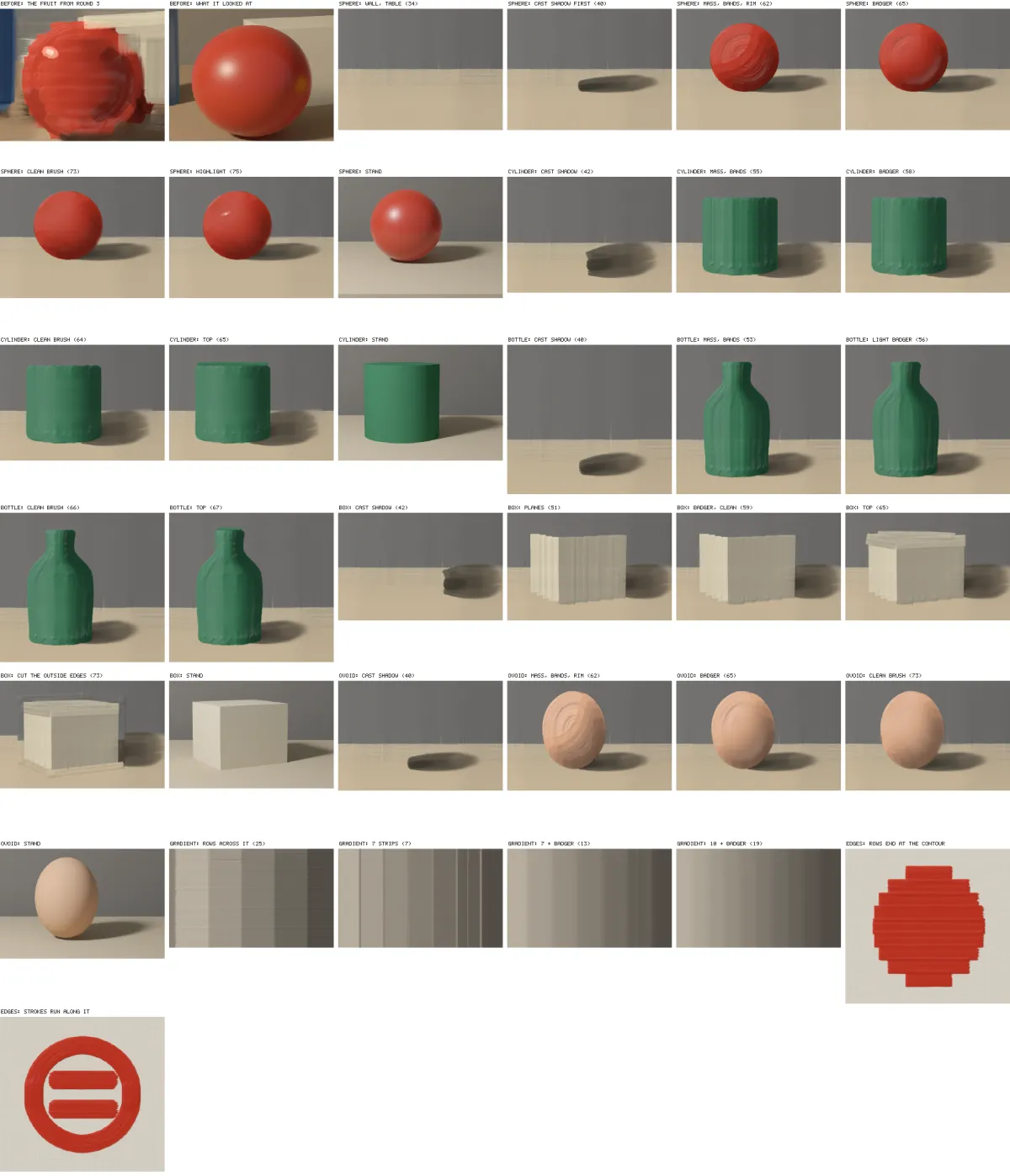
Going back through the earlier runs we found two things. Loading two colours on one brush already existed, and neither still life used it once. And the Hand spent less than half of its stroke budget. Some faults came from tools not being used, not from tools missing. Painted with the recipes, the sphere and the egg came close to the stand render. The bottle still had stripes and a collapsing shoulder, the box grew a halo, and the large cylinder stayed weak.
More tools
The same day a request came in to widen the styles a lot: traditional techniques, experimental ones, and contemporary art as well. Tools came first: masking and peeling, a roller, an airbrush, a spray can and a dotter; then a pouring stick, drips, soak-stain on raw canvas, paper collage, metal leaf and blotting.
We fixed what the test sheets showed before paintings piled up on it. The gold leaf wrinkled too much and the blot came out like a maze. The pouring stick first looked like glossy tube paint, and became a flat enamel skin with an uneven width, pools and spatter. Writing the style pages exposed the biggest gap: there was no way to lay a transparent film with a brush. Some styles depend on glazing, so bristle brushes got a transparent glaze layer, and a finer dotter came with it.
A style is a reference, not a filter
There are thirty style pages: classical techniques such as grisaille, verdaccio, tonalism and sfumato; modern ones from expressionism to constructivism; and post-war and contemporary ones such as colour field, hard-edge, op art, minimalism, pop, stencil, photorealism and action painting. Each page gives settings tested on the real tools and what the Eye should judge the result by.
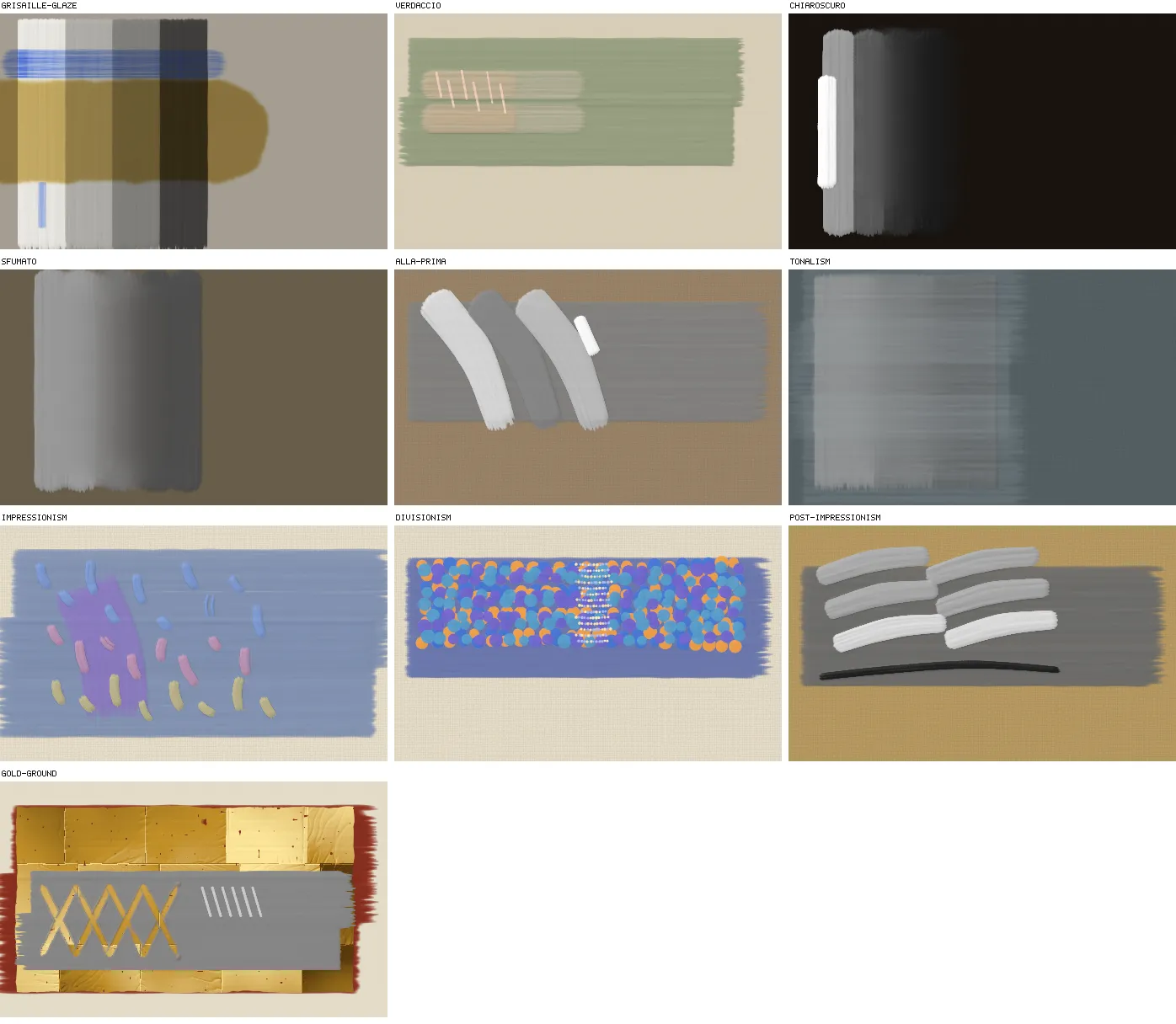
No style is required, and nothing applies a style for you; a picture is only ever the painter's strokes. The pages name no people: a style is treated as a set of techniques, not a way to imitate a particular painter. For the same reason we took a painter's name off a tool label.
The flat, geometric and hard-edge styles came out well. The weak ones were action painting (glossy, like tube paint, with no spatter), expressionism (strokes too smooth), analytic cubism (planes like glass) and impressionism (it ran into the stroke limit). The impressionism page was rewritten around 1,500 touches. At this point the suite had 564 tests and 90 browser hash checks.
Four samples, and a failed self-portrait
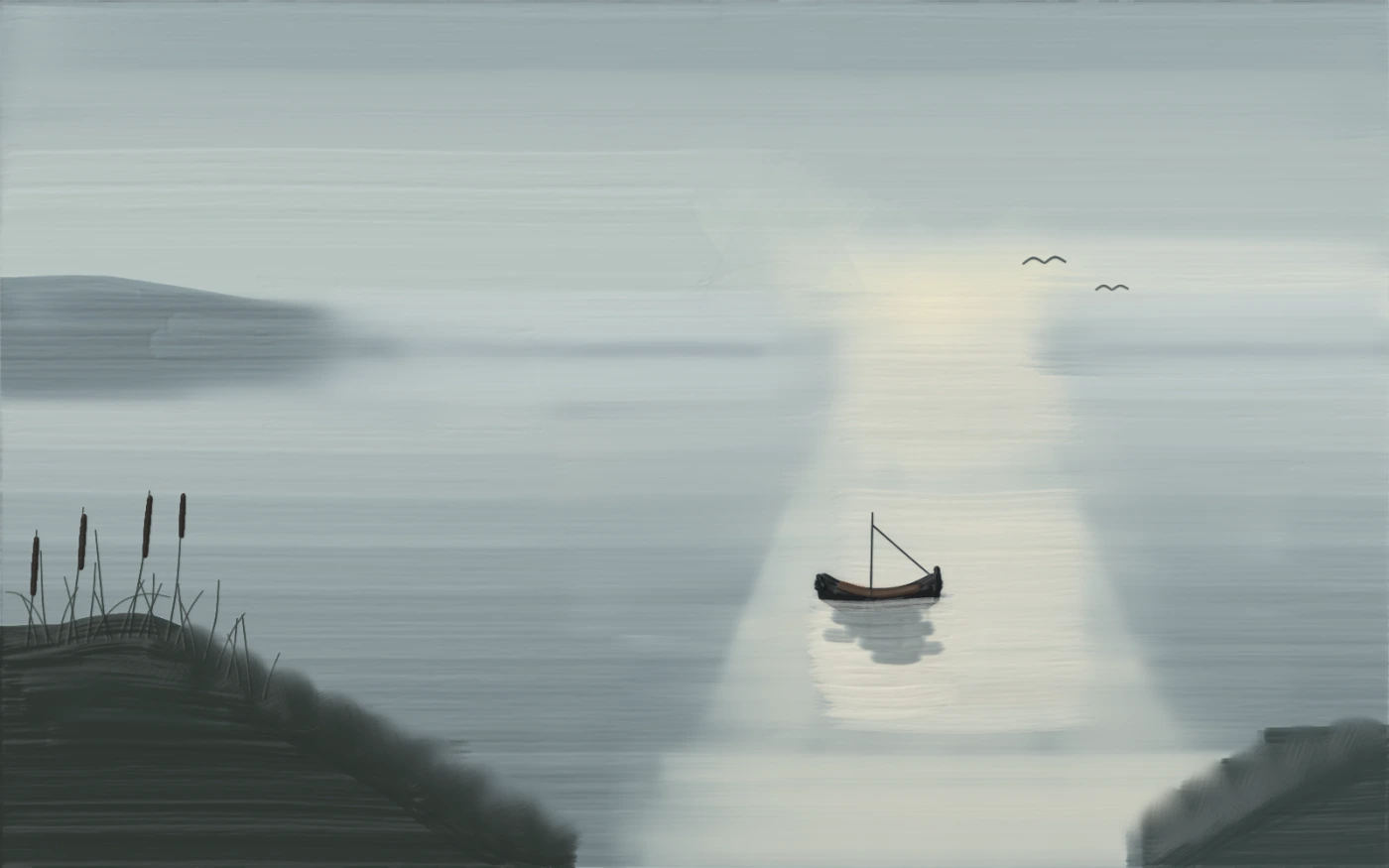
Four paintings by a crew with a mid-size Director and Eye and a small Hand. The landscape "Low Tide, Before the Haze Lifts" (tonalism with alla prima, 546 strokes) was the best. The abstract "Counterweight" had 49 strokes and a strong composition. The still life in analytic cubism was above average.
The self-portrait failed. It was submitted at 456 of 1,500 planned strokes with three blocking faults still open. The records show the Eye had named all three correctly. The Director tried to fix them twice, failed, and accepted them. The crew protocol said a fault could be accepted after two fix rounds, and that sentence beat the block.
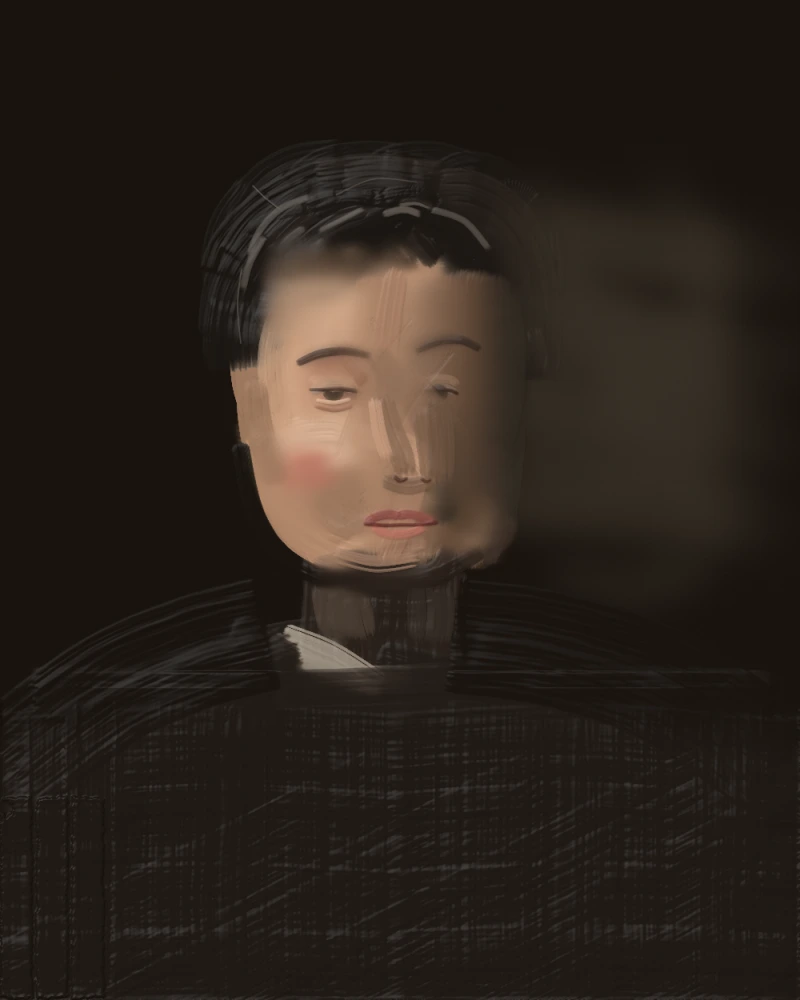
We changed the rule. A block is never accepted while strokes remain, a fix that fails twice changes method, and the remaining stages go on. The rerun passed its final review at 507 of 1,300 planned strokes, 32 minutes on the canvas, 19.3 M tokens, $4.65 at list price. Clearly better than the first try, but the head and the neck didn't connect.
Names converged again: three of the four painters in this round called themselves "Ochre Lane".